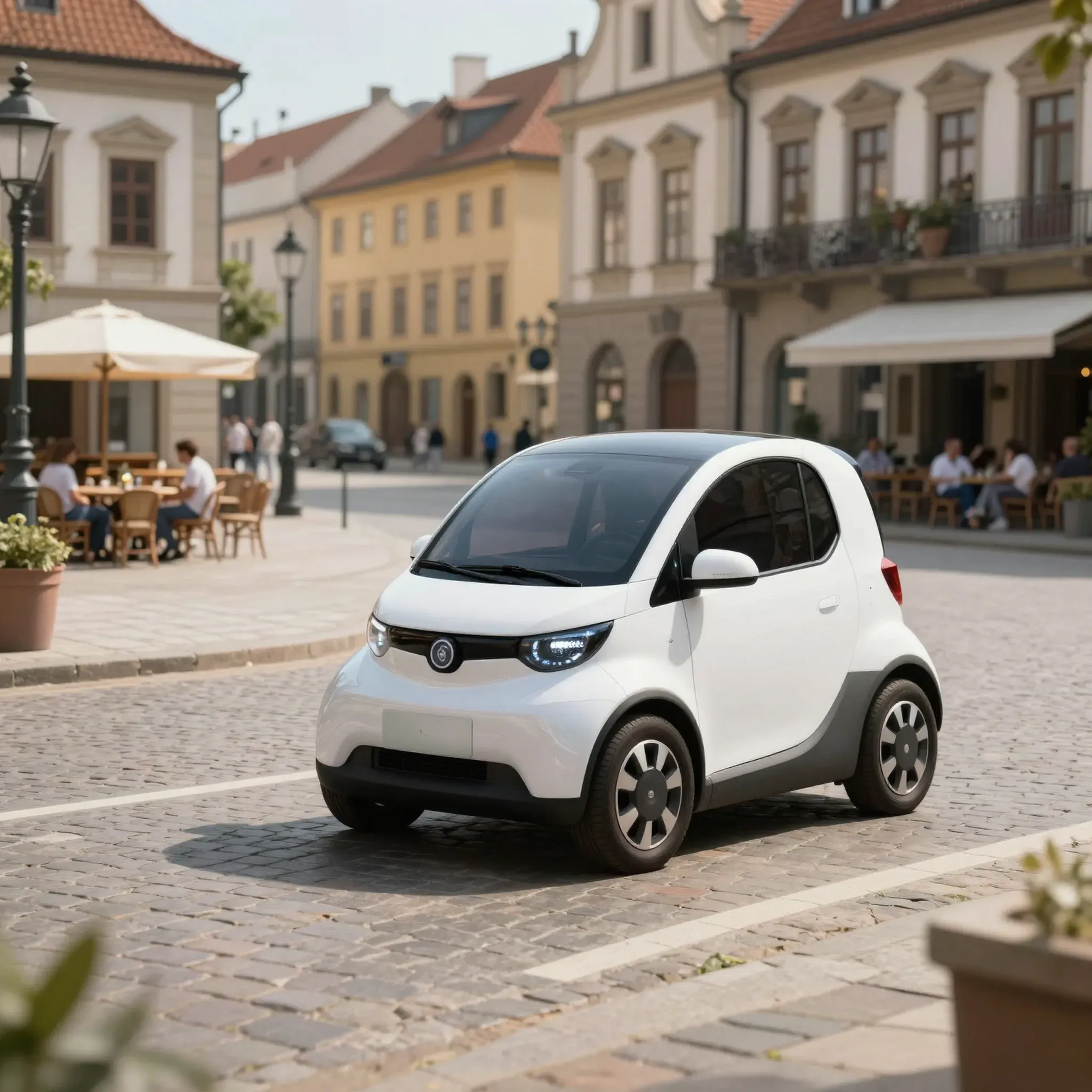
This initiative by Pony AI and Uber is more than just a geographic expansion, but an AI-led, platform-driven mobility system where multiple stakeholders collaborate to unlock scalable deployment models.
For CXOs, CTOs, stepping into autonomous mobility is becoming a structural layer that will influence urban planning, platform economics and the future of customer experience.
A Multi-Partner Model
This collaboration between Pony AI, Uber, and Verne aims to introduce a fully autonomous robotaxi service in Zagreb, Croatia. This marks a significant step forward with its first commercial deployment of self-driving service in Europe and not just a pilot program. Since this is a multi-partner collaboration, each organization is contributing to its own specialized capability. Pony AI brings its advanced level 4 autonomous driving technology, Uber is using its service into a global ride-hailing platform, and Verne will manage the local fleet operations and compliance. This division of responsibility allows a smooth system to operate efficiently while improving scalability.
Rather than attempting to vertically integrate, the partners have leveraged their models enabling a faster deployment and reduced operating costs. This approach has become a blueprint for future autonomous mobility globally.
Why Targeting Europe
Europe is generally lagging behind the United States and China in deployment of autonomous vehicles. This is largely due to strict regulatory frameworks, fragmented national policies and complex urban infrastructure. However, the recent development indicates the region is ready for its next phase of technological innovations.
Regulatory bodies in Europe are slowly opening doors for testing and large-scale commercialization for enterprises, creating opportunities for new companies to establish their fronts. Also, Europe remains a highly untapped market as compared to the U.S. or China, giving first mover advantage for companies.
Choosing Croatia as a launch market is because small markets often give a more controlled environment for testing, allowing companies to refine operations and build regulatory relationships. This will give a better understanding of companies to navigate before expanding into larger markets. The start small, scale fast, approach is a pattern adopted by various global companies, and autonomous mobility is also following the same path.
Business Model
The Pony AI-Uber partnership is a structured approach, not allowing a single company to control the entire value chain, but the model separates technology, platform and operations into different layers. This allows each participant to focus on their strengths and scale. Uber’s role is particularly important as integrating robotaxis into an already established platform with millions of users can eliminate the biggest barriers of adoption. Users do not need to learn a new system as they can simply access autonomous taxis through Uber’s user-friendly interface.
For business leaders, this robotaxis can unlock a new revenue stream. Without the need for human drivers, operating costs can be reduced also improving higher utilization rates and overall profitability. In the future, this model could reshape the urban mobility infrastructure.
Advancing Level 4 Autonomy with Pony AI
Pony AI’s Level 4 autonomous driving technology is capable of operating without human intervention in predefined systems. This is a significant advancement from earlier systems that required constant human oversight. The company’s latest robotaxi system uses advanced perception capabilities, real-time decision making skills, and continuous learning mechanism. Pony AI’s previous deployment in China and other international markets have proven a strong foundation for its European expansion.
Adoption Challenges
However, despite strong momentum, regulatory complexities continue to be a major hurdle in Europe, where policies change across countries. Ensuring compliance while maintaining adoption will require a clear strategy with coordination with local authorities.
Public Trust is another factor, as autonomous vehicles must demonstrate consistent safety and reliability to gain acceptance from the public. High-quality mapping, connectivity, and urban integration are important for successful adoption.
As more players enter this market, differentiation will depend on not just technology alone, but also on cost effectiveness, partnerships and smooth deployment.
Conclusion
The expansion of Pony AI into Europe is strategic and pivotal in the evolution of autonomous mobility. By combining advanced AI skills, platform scalability through Uber and local operational expertise, this initiative will be an example on how complex systems must come together to enable real-world deployment.
For enterprise leaders, this signals that AI-powered platforms are reshaping entire industries and creating new opportunities for growth, innovation and competitiveness.
JMC helps enterprises move beyond experimentation by designing AI-led mobility solutions that align with your long-term business goals.
Is your organisation ready for this structural shift?