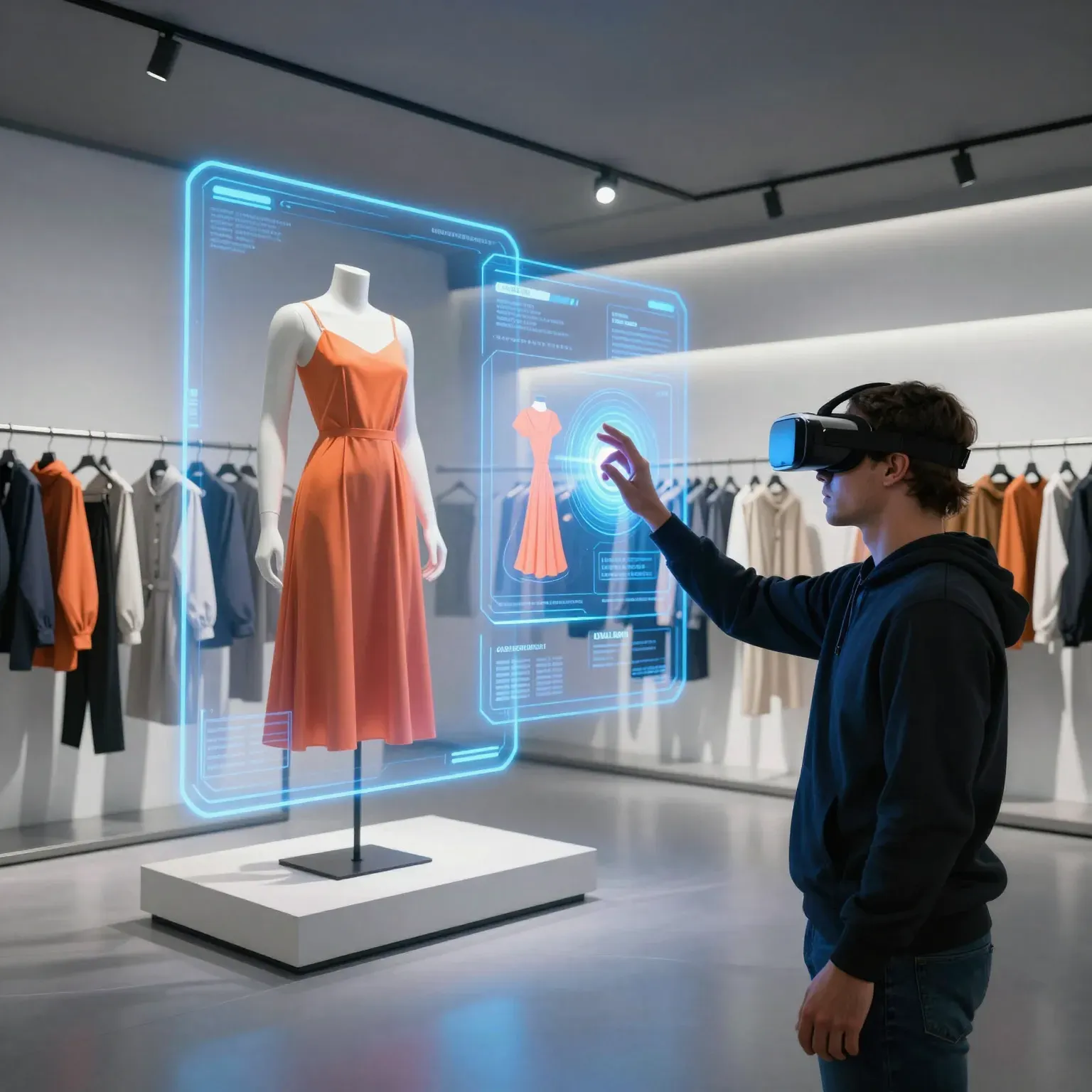
AR & VR: Pillars of Immersive Retail Therapy
Augmented Reality (AR) helps enhance real-world experience with the help of digital information such as visuals text and 3D models- through smartphones and smart glasses. Virtual Reality (VR) on the other hand, transports users into a complete immersion simulated world using headsets for brand-focussed environments.
But together they form the backbone of immersive retail experiences, enabling customers to “try before buy”. This helps customers visualize products in real settings and enjoy frictionless journeys from discovery to checkout. For retailers, AR and VR have emerged as a strategic tool to boost engagement, reduce returns and increase ROI.
Applications of AR in Retail
1. Virtual Try-Ons
Brands like Sephora and Nike have become pioneers with AR-powered try-ons experiences. Customers are able to visualize how a lipstick shade would look on their face or how a sneaker fit with their outfit using just their smartphones. This convenience measures impact. Products featuring 3D/AR content see a 94% higher conversion rate as compared to static images (Shopify).
2. In-store Navigation
IKEA and Lowe’s are using AR wayfinding to guide shoppers to exact aisles and products in store. This improves store efficiency and enhances customer satisfaction. Integrating AR into mobile apps allows customers to locate products faster while retailers can collect in-store behaviour to optimize layout plans.
3. Interactive Product Visualization
IKEA’s Place App and Amazon’s AR view helps consumers to see how furniture would fit into their living room, making them confident of their purchases and thus reducing product returns by over 25%.
4. Personalized Promotions
AR can personalize retail experiences based on user profiles and shopping history. For example, scanning a product that might trigger customized offers or loyalty rewards. These engagements transform passive browsing into active participation. This improves dwell time and recall brand loyalty.
How Enterprises Are Implementing AR/VR to Improve Customer Engagement and ROI
Enterprises are integrating AR/VR across the entire retail value chain. From marketing and sales to post-purchase support.
- Enhanced Brand Storytelling: Brands like Gucci and Tommy Hilfiger use VR showrooms to tell stories beyond the walls of the store. Customers can explore virtual boutiques or attend runway shows driving global reach without physical limitations.
- Employee Training: Retail giants like Walmart and Lowe’s use VR simulations to train employees on customer service, store operations and safety protocols.
- Data-Driven Insights: AR and VR captures customer behaviour data on their interaction, how long they engage, and where they lost interest. Such insights inform product placement and pricing strategies and influence marketing decisions. This directly improves ROI and customer lifetime value (CLV)
- Omnichannel Integration: Retailers that combine AR/VR with CRM and e-commerce are seeing an increase in the measurable ROI. For example, AR try-ons with online checkouts increase purchase content up to 30%. Virtual stores linked with physical logistics enable a seamless click experience.
AR and VR shifts retail from being transactional to experimental, turning browsing into interacting and turning into loyalty.
Challenges of Implementing AR and VR in Retail
While the potential of AR/VR are tremendous, large-scale adoption faces hurdles that CTOs and CXOs have to overcome.
1. High Implementation costs: Developing AR/VR applications and ensuring device compatibility demand significant investment in both hardware and development teams.
2. Integration with Legacy system: Many retailers struggle to connect with AR/VR platforms with existing ERP or CRM systems leading a fragmented customer base.
3. User Accessibility: AR has grown rapidly, but VR experience requires headsets that remain costly. This limits to a niche audience.
4. Data security and Privacy: AR/VR relies on camera feeds, location tracking and biometric data, ensuring GDPR and data compliance being critical.
5. Scalability: To remain engaging, AR/VR content needs frequent updates including products, textures and interactions. This poses scalability challenges for brands looking for large scale adoption.
For enterprise leaders, overcoming these challenges requires strategic partnerships with balanced technology, balancing retail and the immersive ecosystem.
Future Trends in AR/VR in Customer Engagement
The next decade will see an evolution in the AR/VR will shift from an accessory to a necessity in retail. Some key trends that will shape the retail landscape includes:
- AI Personalization: Blending AR/VR with AI can help enhance personalised experiences where digital avatars can recommend styles and provide virtual assistance to customers.
- Mixed Reality: Hybrid environments can mix physical stores with holographic overlays to provide access to catalogs in-store. This enhances product discovery and selling opportunities.
- Metaverse Commerce: Meta horizon World and decentraland, brands are opening virtual storefronts where customers can shop crypto- merging lines between entertainment and retail.
- Digital Twins: IoT and VR create digital replicas of their stores for real-time monitoring.
- 5G-Enabled Experiences: as 5G expands, high quality AR/VR streaming will become smoother and more interactive, accessible even on mobile networks.
Gartner predicts over 50% of huge retailers will integrate at least one AR/VR application by 2030. This could either be omnichannel strategies, making immersive experiences with shopping.
Conclusion
AR and VR are redefining the retail experience, success will depend on how effectively they implement technology into a customer centric strategy. JMC helps retail leaders design and implement scalable AR/VR ecosystems. From developing immersive brand applications to integrating data pipelines and ensuring cross-platform analysis.
Curious how AR and VR can redefine your retail strategy?