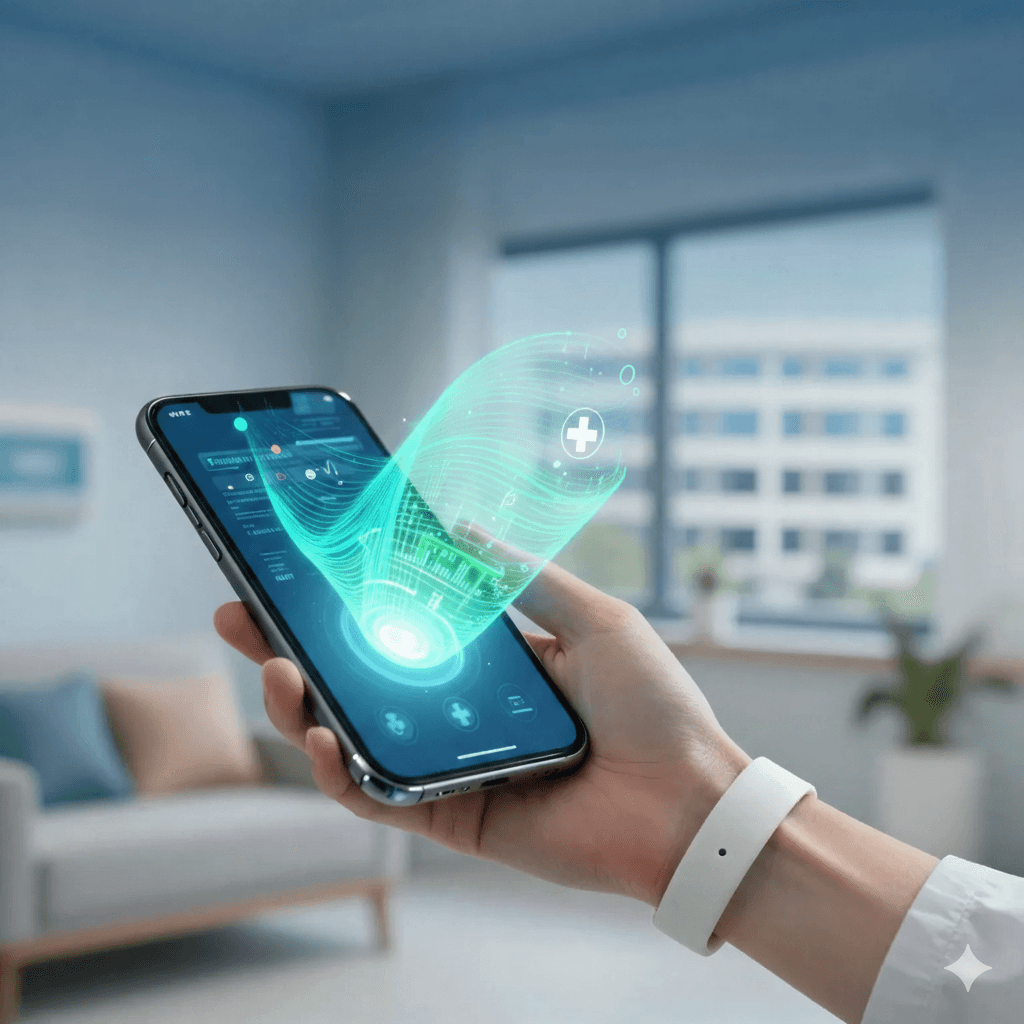
Growing Telemedicine Market
After the COVID-19 pandemic, the focus towards healthcare has increased, especially the virtual care trend. The global telemedicine market is witnessing unprecedented expansion, driven by rising healthcare demands, improved connectivity and shift in patient expectations. The global telemedicine market size is estimated to reach $380 USD by 2030, growing at over 18% CAGR (Fortune Business Insights, 2024). This high demand is due to integration of AI-powered diagnostics, remote monitoring and mobile health applications. Emerging economies like India, Brazil and Indonesia have seen large scale adoption due to government initiatives and use of smartphones. However, in developed markets, telemedicine has evolved into a strategic pillar of modern healthcare infrastructure.
Key Telemedicine Trends Reshaping Healthcare in 2025
The telemedicine industry is shifting towards sustainability and value-based models with the new emerging trends.
1. Remote Patient Monitoring
RPM technologies paired with wearables allow demonstration of vital signs such as heart rate, saturation of oxygen, and blood glucose levels. Patients can now transmit data directly from their smartphones to providers. Early intervention with predictive care helps early detection. RPM helps in minimizing readmissions and shorter hospital stays, thus reduction in hospital bills leading to patient satisfaction.
A McKinsey report shows RPM adoption can reduce hospital readmissions by up to 25% in chronic disease management.
2. Digital Therapeutics
DTx utilizes software based interventions to prevent, manage and treat specific medical conditions. Unlike normal wellness apps, digital therapy is clinically validated and tailored as per patient needs. Examples include behavioural therapy apps for mental health and virtual rehabilitation programs for heart patients. Such integrated solutions enhance patient loyalty, improve outcomes and deliver scalable ROI for healthcare providers.
3. AI and Predictive Analytics
Artificial intelligence is revolutionizing diagnostic procedures, risk management and treatment plans for patients. AI-driven predictive models can analyze large datasets to anticipate disease progression and optimize medication protocols, and makes decision-making easier. This motivates clinicians to act proactively, reducing complications and hospital costs. For CTOs, AI integration also creates a path to leverage platforms as data-driven engines for improvement.
4. AR/VR in Immersive Telemedicine
Augmented Reality (AR) and Virtual Reality (VR) are being implemented into immersive experiences into telemedicine. Surgical simulations, remote training for doctors and patient education has been made easier with AR/VR technologies. This trend is particularly relevant for specialist care and tele-mentoring in regions lacking expert healthcare. This expands the access to high-quality healthcare beyond geographical boundaries.
5. Telepharmacy
Telepharmacy enables remote prescription management, counseling, and monitoring of medicine. Pharmacists can review patient histories, verify prescriptions and provide real-time virtual guidance. Telepharmacy reduces medication error, supports chronic disease management. This ensures rural or underserved populations receive timely pharmaceutical care. For hospitals it's easier to optimize manpower and cut operational costs by automating the regular pharmacy workflows.
6. Patient-focussed Care Models
The emphasis is shifting from provider-driven to patient centered models, this makes providing care personalized, continuous and digitally integrated. Telemedicine platforms facilitate follow-ups, management tools and virtual appointments. These solutions allow patients to rigorously take an active role in their health. This approach helps to improve engagement, reduces hospital visits and contributes to long term healthcare.
7. Medical Drones and Emergency Medicine
Medical drones are emerging as critical enablers of rapid delivery of drugs, vaccines and diagnosis. This is especially useful in emergency scenarios and access in remote regions. Combined with telemedicine, medical drones ensure that life-saving technologies reach patients, faster and efficiently improving response time and survival rates. This integration improves how technology can extend care beyond traditional limitations offering both operational and social ROI.This innovation, piloted in India and also Africa, demonstrates how technology delivers. both operational efficiency and social ROI by bridging last-mile healthcare gaps.
The Future of Telemedicine
The global telehealth market is projected to surpass $175.5 billion by 2026 increasing almost four times since 2019 values. Factors driving this growth include AI integration, hybrid care models, in-person and virtual visits, that improves cross-border healthcare delivery. As telemedicine matures, we can expect deep rooted integration with electric health records (EHRs), predictive analytics and patient monitoring systems.
Telemedicine is no longer an accessory service but is becoming a primary interface between patients and providers with an impact on operational efficiency, clinical outcomes in healthcare.
Why Telemedicine delivers ROI
Investing in telemedicine is about impacting the financial outcome and strategic positioning of enterprises.
1. Operational Efficiency: Fewer in-person visits leads to reduction in overhead costs, letting staff to focus on critical tasks.
2. Patient Retention: remote monitoring and engagement strengthen patient loyalty.
3. Preventive Care: early detection reduces expensive hospital bills.
4. Market Differentiator: offering advanced care services attract new patients and strengthen the brand as a pioneer in the field.
Conclusion
Telemedicine is a game changer in the healthcare industry. From remote monitoring and AI-driven programs to telepharmacy, AR/VR and medical drones, these technologies are making healthcare accessible, personalized and efficient. Healthcare leaders are adopting telemedicine is not just an upgrade- it is strategic investment in patient outcomes, operational efficiency and sustainable growth.
With JMC’s comprehensive platform, healthcare organizations can enhance telemedicine trends to expand access, improve clinical efficiency and generate a measurable ROI.
Let JMC help your organization stay ahead of the curve, maximize investment value, and transform healthcare delivery for the better. For CXOs and CTOs, partnering with JMC means addressing business strategies with patient outcomes.
Healthcare's future is virtual. Is your organization ready to be a part of it?