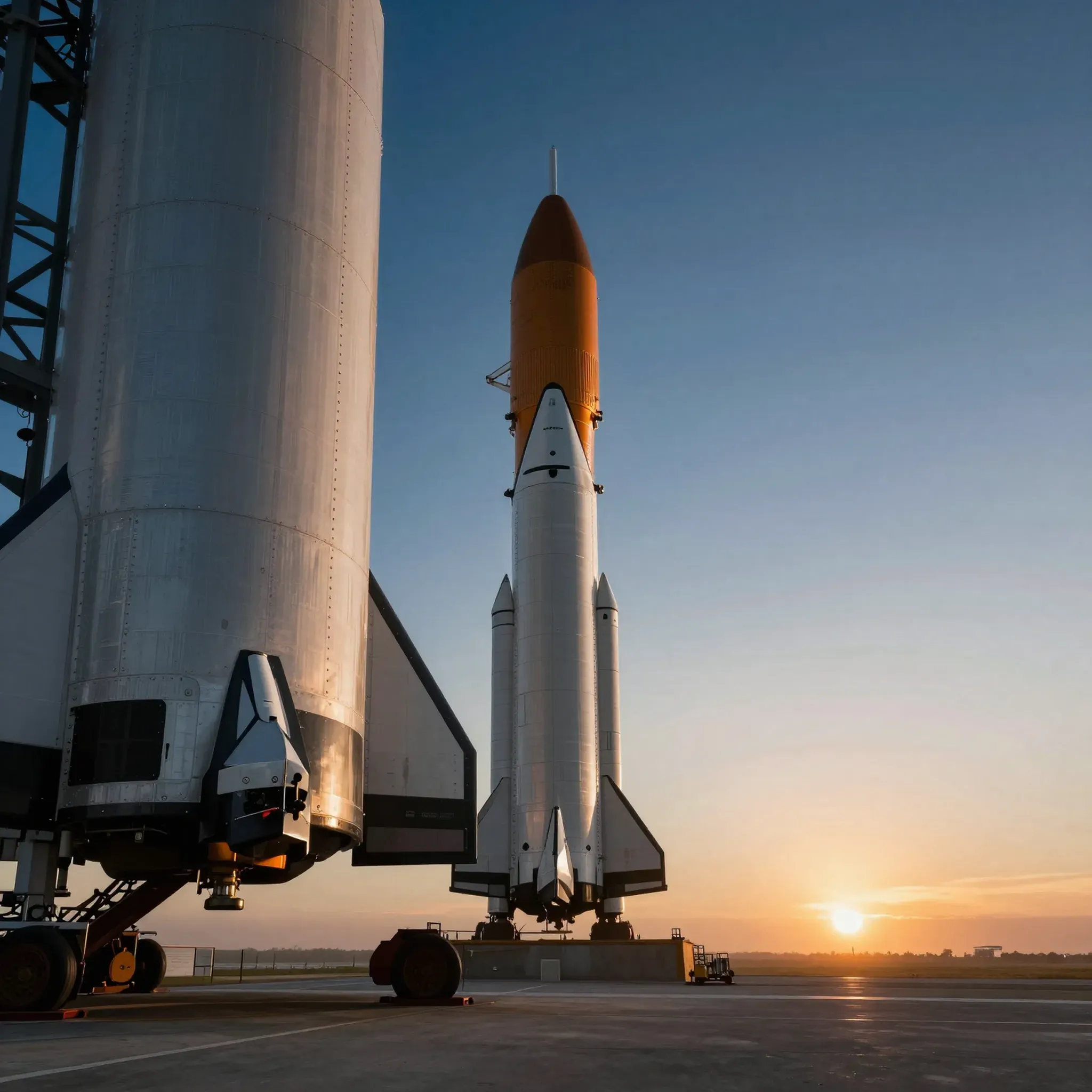
This is not a routine public offering. It marks the moment space stops being a venture-backed frontier and starts trading on the Nasdaq alongside the world's most valuable companies. And for industries ranging from telecom to defense to institutional finance, the implications are far more immediate than most are currently pricing in.
From Rocket Maker to Revenue Machine
SpaceX's valuation isn't being carried by hype alone; the underlying numbers are genuinely hard to ignore. Starlink, its satellite internet service, closed 2025 with 9.2 million active subscribers and over $10 billion in revenue, with analysts projecting that figure could climb to $24 billion by the end of 2026. That kind of growth takes most telecom companies a decade to build. Starlink did it in under three years of meaningful commercial operation.
Beyond Starlink, SpaceX has pulled in over $24.4 billion in federal government contracts since 2008, spanning NASA, the Air Force, and the Space Force. Then came the February 2026 merger with xAI, Musk's artificial intelligence venture. That deal transformed SpaceX from a rocket manufacturer into something closer to an orbital intelligence company, integrating the Grok AI model directly into the Starlink network and enabling space-based edge computing.
What lists on Nasdaq in June won't resemble any aerospace company investors have priced before. It sits at the intersection of satellite infrastructure, defense contracting, and AI, and the market will need entirely new frameworks to value it.
Every Sector Must Recalibrate
The consequences of a SpaceX listing extend well beyond aerospace. Telecom giants like AT&T and Verizon are already under pressure as Starlink pushes beyond rural broadband into mainstream urban markets. Unlike fiber or 5G, Starlink doesn't need ground infrastructure to expand into a new geography. That structural cost advantage makes it a fundamentally different kind of competitor, one that traditional telecom was never really built to respond to.
On the financial side, the scale of institutional backing is telling. SpaceX has lined up 21 banks to manage the offering, an unusually large syndicate for even a listing of this size. That isn't the composition of a speculative bet. It is the kind of arrangement that reshapes portfolio allocations across pension funds, sovereign wealth vehicles, and asset managers at the same time.
Defense is another area that warrants close attention. As SpaceX assumes a larger role in military satellite communications globally, the boundary between commercial aerospace and national security infrastructure is becoming harder to define. That has direct consequences for how governments structure procurement, regulation, and oversight going forward and for the private players competing in that space.
The Governance Gap
There is a real tension sitting underneath all the excitement. SpaceX is reportedly planning a dual-class share structure that would keep enhanced voting rights with Musk and other insiders, a setup that preserves founder control but significantly limits the influence public shareholders actually carry.
That matters because Musk's vision for SpaceX runs on timelines that don't fit quarterly reporting cycles. Mars missions, lunar infrastructure, orbital data centers, these are decade-long bets, not fiscal year deliverables. Finance academics have been clear that even companies with strong fundamentals can stumble at IPO if market conditions shift, and current equity market volatility remains a live risk.
Once public, SpaceX will face consistent pressure to lean into its most profitable verticals: Starlink subscriptions, government contracts, and longer-horizon projects. Whether that changes the company's actual direction, or just its investor communications, is something the market will test in real time.
Space Economy, Unlocked
A SpaceX listing doesn't just create a new stock; it creates a pricing benchmark for an entire sector. Once the world's most valuable aerospace company is publicly traded multiple times, every satellite operator, launch provider, and space data firm has a comparable point to. That unlocks fundraising conversations, accelerates M&A activity, and pulls institutional capital into a sector that has largely remained inaccessible outside of venture portfolios.
At a $1.75 trillion post-money valuation, SpaceX would immediately rank among the world's ten most valuable publicly traded companies, sitting alongside Apple, Microsoft, Nvidia, and Alphabet. That reshapes how the broader market thinks about space not as a peripheral innovation sector, but as a core infrastructure category deserving its own allocation.
With Starlink revenue projected to reach between $15.9 billion and $24 billion in 2026, the financial case for the space economy is no longer theoretical. SpaceX's IPO doesn't just validate the sector's long-term projections; it compresses the timeline considerably. The early-mover window for positioning within it is narrowing faster than most anticipated.
JMC tracks the convergence of capital markets, frontier technology, and global infrastructure. Explore our latest industry reports for deeper analysis on the investment shifts reshaping the space economy.
Is your organization paying close enough attention, or will it be catching up once the window has already closed?